Mayo Clinic Stress Management: Tips, Techniques, And 4 A's
Stress isn't just an inconvenience, it's a signal. When left unchecked, it chips away at your health, your relationships, and your sense of direction. The Mayo Clinic stress management framework has become one of the most referenced approaches for understanding and addressing chronic stress, offering both clinical insight and practical techniques you can apply immediately.
At Grant You Greatness, Dr. Grant Horner works with clients across North County San Diego who recognize that stress has started running the show. Whether it's anxiety that won't quiet down, a career that drains more than it gives, or relationships feeling the weight of unspoken tension, stress often sits at the center. Understanding proven methods, like the Mayo Clinic's "4 A's" framework, gives you a starting point for change.
This article breaks down Mayo Clinic's core stress management principles, the specific techniques they recommend, and how to put these strategies into action in your own life.
What Mayo Clinic says stress looks like
Mayo Clinic defines stress through its visible and invisible symptoms rather than as an abstract feeling. You experience stress as a physical, emotional, and behavioral response to demands that exceed your current capacity to cope. The organization emphasizes that stress symptoms often disguise themselves as other issues, which means you might treat the headache without recognizing the underlying pressure causing it.
Physical warning signs
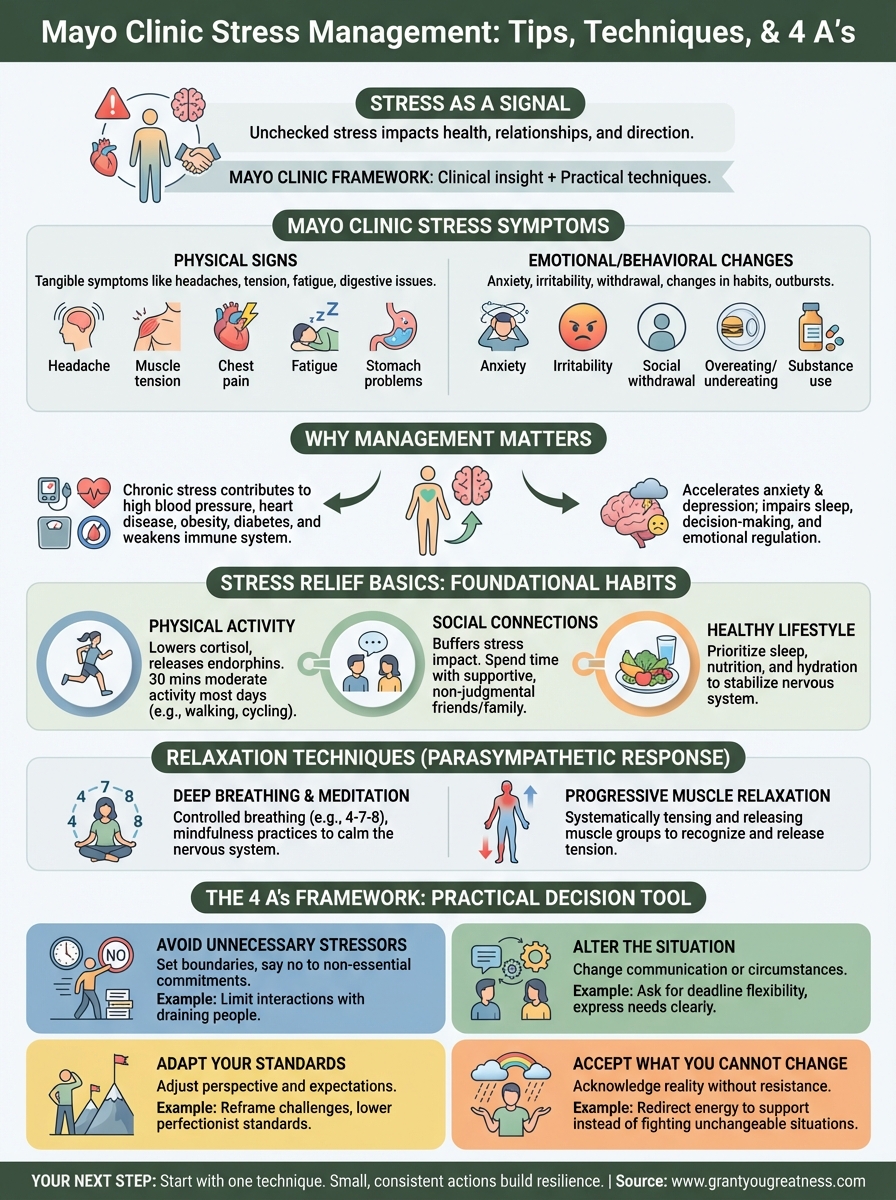
Your body telegraphs stress through tangible symptoms that often show up before you consciously recognize feeling overwhelmed. Mayo Clinic lists headaches, muscle tension, chest pain, fatigue, and stomach problems as common physical indicators. Sleep disruptions frequently accompany these symptoms, whether you're lying awake replaying conversations or waking up exhausted despite a full night's rest. Changes in sex drive also signal that your nervous system is prioritizing survival over other functions.
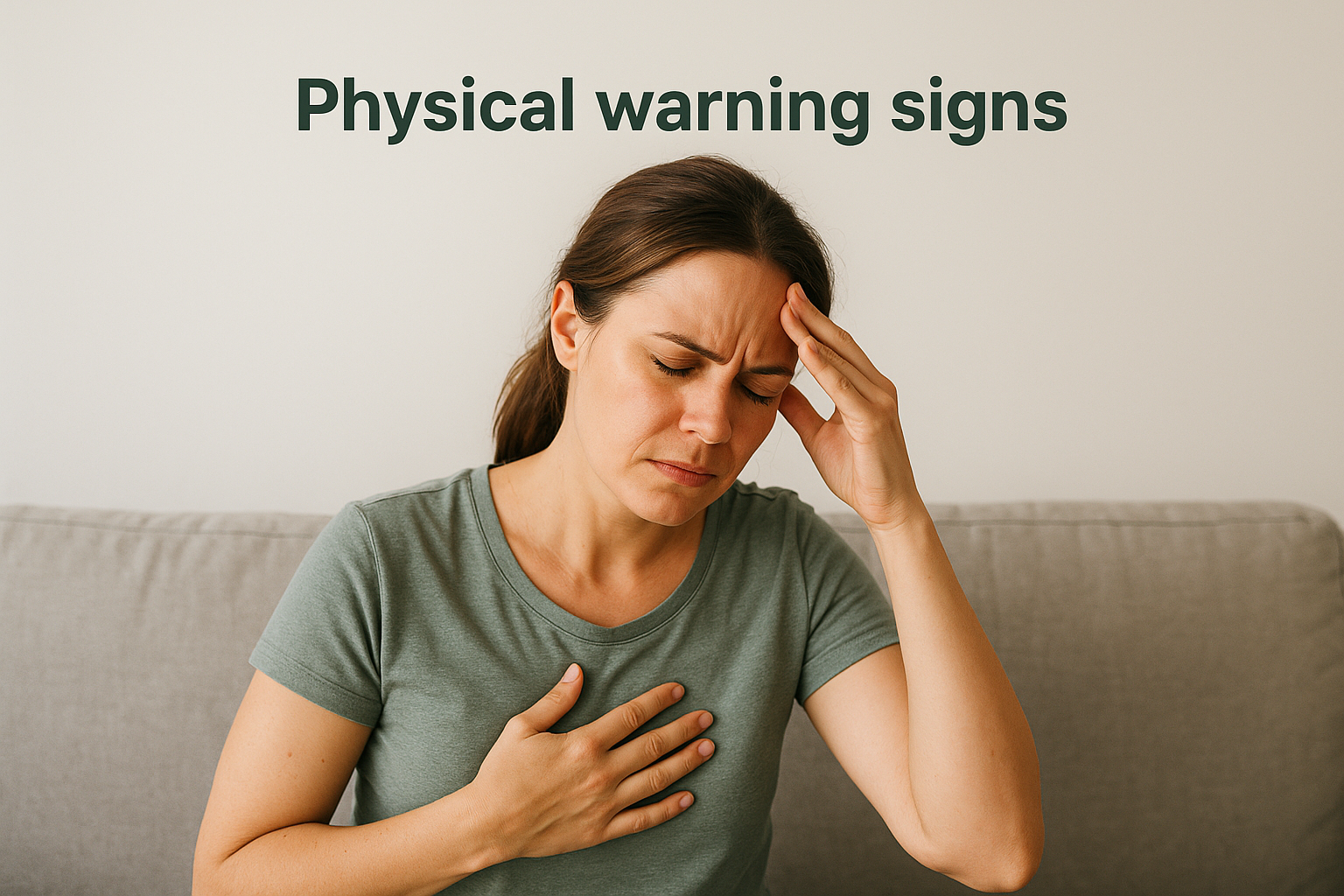
Chronic stress keeps your body in a state of heightened alert, which taxes systems meant for short-term emergencies.
Emotional and behavioral changes
Stress reshapes how you think, feel, and act in ways that compound the original problem. Mayo Clinic notes that anxiety, restlessness, lack of motivation, and irritability all point to stress overload. You might notice yourself withdrawing from social situations that once energized you, or snapping at people over minor frustrations. Overeating, undereating, angry outbursts, and increased substance use represent behavioral attempts to manage uncomfortable emotions. These coping mechanisms provide temporary relief while making the underlying stress worse, which is why recognizing the pattern matters more than judging individual choices.
Why stress management matters for your health
Mayo Clinic stress management principles exist because unmanaged stress directly damages your body and mind. The organization's research shows that chronic stress contributes to major health problems, including high blood pressure, heart disease, obesity, and diabetes. Your immune system weakens under sustained pressure, making you more vulnerable to infections and slower to heal from injuries. These aren't distant possibilities but measurable outcomes that appear in patients who ignore stress signals for months or years.
Mental health deteriorates faster
Stress acts as an accelerant for anxiety and depression, conditions that Mayo Clinic treats extensively. When you remain in a constant state of overwhelm, your brain chemistry shifts in ways that make calm thinking nearly impossible. Sleep quality drops, decision-making suffers, and emotional regulation becomes harder with each passing week. The relationship between chronic stress and mental health conditions runs in both directions, meaning untreated stress makes existing conditions worse while creating new ones.
Managing stress isn't optional self-care but a medical necessity that prevents serious health consequences.
Your relationships and work suffer
Beyond individual health, unmanaged stress damages the connections and careers you've built. Mayo Clinic notes that irritability, withdrawal, and poor communication all stem from stress overload, which means the people closest to you often bear the brunt of your internal struggle.
Stress relief basics Mayo Clinic emphasizes
Mayo Clinic stress management begins with foundational habits that stabilize your nervous system before you attempt advanced techniques. These basics address the biological roots of stress rather than just managing symptoms. Physical activity, social connection, and healthy lifestyle choices form the core of their approach because research shows these factors measurably reduce cortisol levels and improve stress resilience.
Physical activity reduces stress hormones
Regular exercise directly counteracts stress by lowering cortisol and releasing endorphins, your body's natural mood elevators. Mayo Clinic recommends 30 minutes of moderate activity most days, which can be walking, swimming, cycling, or any movement you'll actually maintain. You don't need intense workouts to see benefits. Consistency matters more than intensity because your body adapts to regular movement patterns that signal safety rather than threat.
Physical activity provides immediate stress relief while building long-term resilience against future pressures.
Social connections buffer stress impact
Strong relationships protect you from stress damage in ways that solitary coping strategies cannot match. Mayo Clinic emphasizes spending time with supportive friends and family who listen without judgment. Sharing your concerns with someone you trust reduces the burden you carry alone and often provides perspective you can't access while stuck in your own thoughts.
Relaxation techniques Mayo Clinic recommends
Mayo Clinic stress management includes specific relaxation techniques backed by clinical research that calm your nervous system in measurable ways. These methods work by triggering your parasympathetic response, the biological opposite of the fight-or-flight state that stress activates. You'll find the most benefit when you practice these techniques regularly rather than waiting until stress peaks.
Deep breathing and meditation practices
Controlled breathing forms the foundation of Mayo Clinic's relaxation recommendations because it's accessible anywhere and produces immediate results. You can practice 4-7-8 breathing by inhaling for four counts, holding for seven, and exhaling for eight. This pattern slows your heart rate and signals safety to your brain. Meditation practices ranging from five minutes to longer sessions help you observe thoughts without reacting to them, which breaks the cycle of stress-fueled rumination.
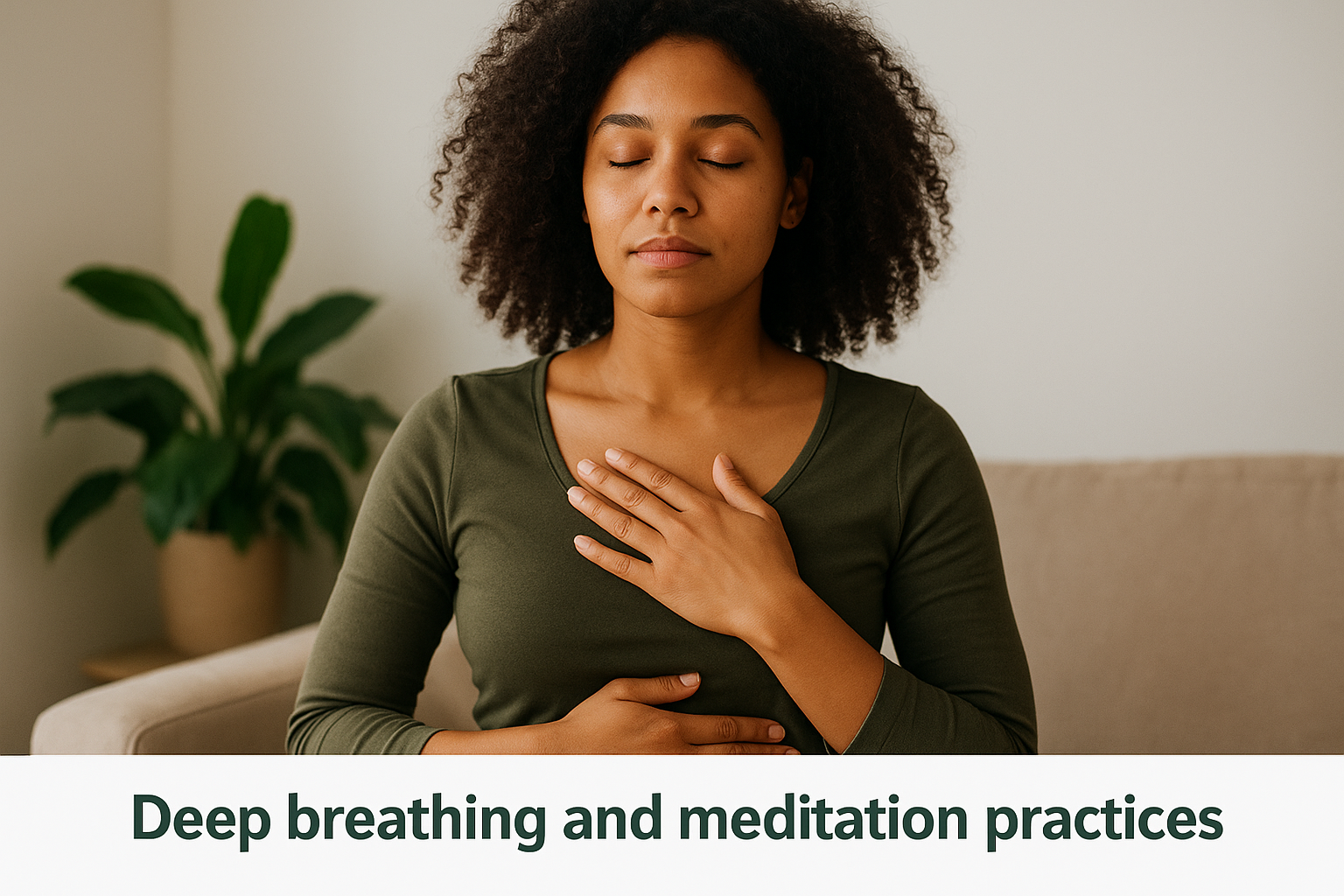
Simple breathing exercises activate your body's natural relaxation response within minutes.
Progressive muscle relaxation
Tensing and releasing muscle groups systematically teaches you to recognize where stress lives in your body. Mayo Clinic recommends starting with your toes and moving upward, holding tension for five seconds before releasing completely. This technique proves particularly useful before sleep or during anxious moments when physical tension compounds mental stress.
The 4 A's of stress management with examples
Mayo Clinic stress management teaches the "4 A's" framework as a practical decision tool when you face stressful situations. These four strategies, Avoid, Alter, Adapt, and Accept, give you specific actions to take rather than leaving you paralyzed by stress. Each approach works best for different scenarios, which means you'll choose based on your circumstances and control level.
Avoid unnecessary stressors
You can eliminate certain stress sources by setting boundaries and saying no to non-essential commitments. If a particular colleague consistently drains your energy, you might limit interactions to email rather than in-person meetings. Avoiding doesn't mean running from all difficulty but rather recognizing which battles aren't worth fighting.
Alter the situation when possible
Changing how you communicate transforms many stressful interactions. You might ask your manager for deadline flexibility instead of accepting impossible timeframes silently. Expressing your needs clearly and requesting specific changes often resolves stress that feels permanent.
Adapt your standards
Adjusting your perspective helps when you can't change external circumstances. You might reframe a tedious project as skill-building rather than torture, or lower perfectionist standards that exhaust you.
The 4 A's give you concrete choices instead of leaving you stuck in reactive stress patterns.
Accept what you cannot change
Some situations demand acknowledgment rather than resistance. Accepting a loved one's chronic illness doesn't mean giving up but rather redirecting energy toward support instead of fighting reality.
Your next step
Understanding Mayo Clinic stress management principles gives you a framework, but knowledge alone doesn't reduce stress. You need to test these techniques in your actual life, notice what works, and adjust based on real results. Start with one technique from the 4 A's or pick a single relaxation practice to use daily for the next week. Small, consistent actions build the resilience that theoretical understanding cannot.
Stress becomes harder to manage when it tangles with deeper issues like relationship conflicts, career dissatisfaction, or unresolved grief. You might recognize that stress isn't just about busy schedules but about feeling stuck in patterns that no longer serve you. Dr. Grant Horner works with individuals and couples in North County San Diego who need more than stress tips. If you're ready to address what's underneath rather than just managing symptoms, schedule a free consultation to explore whether professional support fits where you are now.