10 Stress Management Techniques That Work for Busy Adults
Your to-do list keeps growing. Deadlines pile up. Family responsibilities don't pause. And somewhere between all of it, you're supposed to find time to actually live your life. If this sounds familiar, you're not alone, and you're probably searching for stress management techniques that fit into your already-packed schedule without adding more pressure to your plate.
The good news? Managing stress doesn't require overhauling your entire life or spending hours meditating on a mountaintop. What it does require is practical, evidence-based strategies you can actually use, whether you have five minutes between meetings or a full evening to yourself. The key is finding what works for your specific situation and building habits that stick.
At Grant You Greatness, Dr. Grant Horner has spent over 20 years helping busy adults in North County San Diego and beyond break free from the cycle of chronic stress and anxiety. Drawing from that clinical experience, this guide covers 10 proven techniques that real people use to regain control. You'll find everything from quick breathing exercises to longer-term lifestyle shifts, all designed to help you feel less overwhelmed and more present in the life you're working so hard to build.
1. Build a personalized stress plan with a therapist
Working with a trained therapist gives you customized stress management techniques that fit your specific triggers, schedule, and goals. Instead of guessing which strategies might help, you get a clear roadmap built around your real life. This approach cuts through the trial-and-error phase and helps you make progress faster, especially when stress feels overwhelming or chronic.
What it is
A personalized stress plan starts with identifying your unique stressors and how they show up in your body and behavior. Your therapist helps you pinpoint patterns you might miss on your own, like the connection between Sunday night anxiety and an unspoken fear of disappointing your boss. From there, you build a practical toolkit of coping strategies that match your lifestyle, whether that means breathing exercises before meetings or boundary scripts for family gatherings.
Why it works
Generic advice rarely sticks because it doesn't account for your specific circumstances. A therapist trained in anxiety and stress knows how to adapt evidence-based methods to fit your needs, work style, and energy levels. You also get accountability and course correction when techniques stop working or life changes, which keeps you from falling back into old stress patterns. Research consistently shows that therapy leads to measurable improvements in stress symptoms, particularly when combined with behavioral changes.
"The most effective stress management plans aren't about doing more, they're about doing what actually moves the needle for you."
How to do it in a busy schedule
Most therapy sessions run 50 minutes weekly or biweekly, which you can schedule during lunch, early morning, or evening slots. Online therapy removes commute time entirely and lets you connect from your car, office, or home. If your schedule shifts constantly, look for therapists who offer flexible booking or emergency sessions when you need extra support during high-stress periods.
What to expect in the first few sessions
Your first session focuses on understanding your current stress levels and what brings you in. Expect questions about your daily routine, relationships, work environment, and past experiences with anxiety or stress. By sessions two and three, you'll start practicing concrete techniques and identifying which stressors you can eliminate versus which ones need better coping strategies. Most people notice small improvements within the first month, especially in how they respond to stress triggers in real time.
2. Use the 3-3-3 grounding rule for fast anxiety relief
The 3-3-3 rule gives you an instant anchor when stress floods your system. This technique pulls you out of racing thoughts and back into your physical surroundings through a simple sensory exercise that takes less than two minutes. You can use it anywhere, from your desk to a crowded subway, without anyone noticing.
What it is
You name three things you see, three things you hear, and three ways you can move your body. The visual part might include your coffee mug, the clock on the wall, and a pen on your desk. For sounds, you could notice the hum of the air conditioner, distant voices, or cars outside. Body movements can be as simple as wiggling your toes, rolling your shoulders, or stretching your fingers.
Why it works
This technique interrupts the stress response cycle by redirecting your attention away from internal worry and toward external reality. When anxiety spikes, your brain struggles to focus on immediate sensory details and worst-case scenarios at the same time. The 3-3-3 rule forces your nervous system to shift gears, creating space between the trigger and your reaction.
"Grounding techniques work because they give your brain something concrete to do instead of spiraling through what-ifs."
How to do it in a busy schedule
You need no preparation or special environment to practice this technique. Keep it in your back pocket for moments when you feel stress building, whether that happens during a tense email exchange or right before a difficult conversation.
Best times to use it
Try the 3-3-3 rule when you notice physical anxiety symptoms like a racing heart, tight chest, or shallow breathing. It works particularly well before presentations, during conflicts, or when you catch yourself catastrophizing about future events.
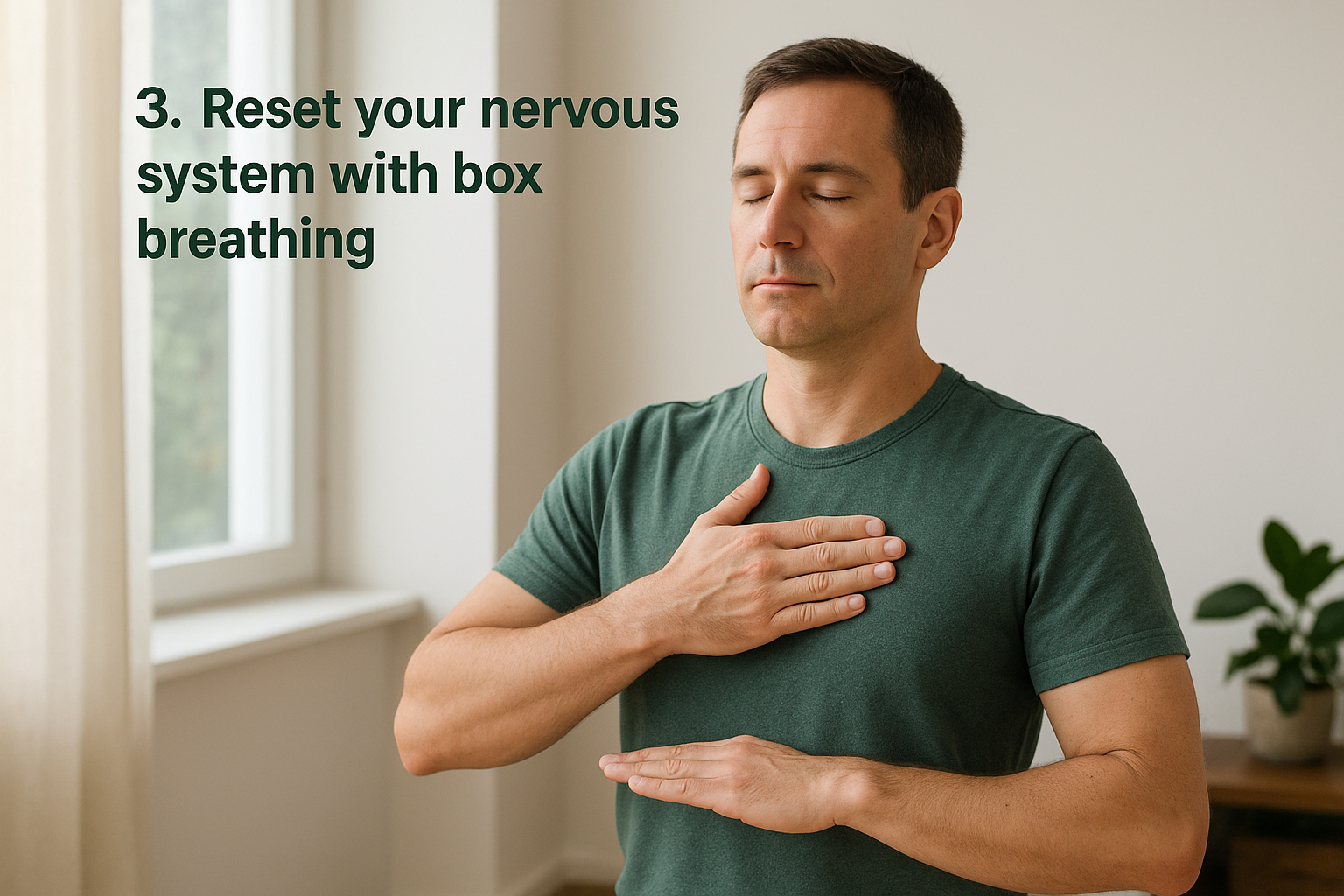
3. Reset your nervous system with box breathing
Box breathing creates a measurable shift in your autonomic nervous system through controlled breath patterns. This technique takes three to five minutes and delivers immediate stress relief by balancing oxygen and carbon dioxide levels in your bloodstream. You can practice it sitting at your desk, standing in line, or lying in bed without drawing attention.
What it is
You breathe in for four counts, hold for four counts, exhale for four counts, and hold again for four counts. Each cycle forms a "box" pattern that you repeat four to six times in a row. Your breath stays smooth and controlled throughout, never forced or gasping.
Why it works
This breathing pattern activates your parasympathetic nervous system, which counteracts the fight-or-flight response driving your stress. The equal timing between inhales, holds, and exhales signals safety to your brain, slowing your heart rate and lowering cortisol production. Navy SEALs use this exact method before high-pressure situations because it works under extreme conditions.
"Controlled breathing is one of the few stress management techniques that gives you direct access to your body's calm response."
How to do it in a busy schedule
Set a phone timer for three minutes and practice during natural breaks in your day. Try it before checking email in the morning, between back-to-back meetings, or right when you get into your car after work.
Common mistakes to avoid
Don't hold your breath so long that you gasp on the inhale. Start with three-count intervals if four feels uncomfortable, then build up as your lung capacity improves. Skip this technique if you feel dizzy and breathe normally until the sensation passes.
4. Take a 10-minute walk to burn off stress
A short walk gives your body a physical outlet for stress hormones while shifting your mental state through movement and environment change. This approach works as one of the most accessible stress management techniques because it requires no equipment, no special clothing, and delivers measurable relief in the time it takes to grab a coffee.
What it is
You step away from your desk, home, or current stressor and walk at a comfortable pace for ten minutes. The route doesn't matter, whether you circle your office building, walk around your block, or pace through a parking lot. Your goal is continuous movement that gets your blood flowing without exhausting you.
Why it works
Walking triggers your body to metabolize cortisol and adrenaline, the chemicals flooding your system during stress. Movement also increases endorphin production, which naturally counters anxiety and irritability. Research shows that even brief walks improve mood and cognitive function within minutes, making it easier to think clearly when you return to the problem.
"Physical movement literally burns through the stress chemicals your body produces during fight-or-flight mode."
How to do it in a busy schedule
Schedule your walk as a mandatory meeting with yourself at the same time each day. Try mid-morning when energy dips, after lunch to reset for afternoon tasks, or immediately after work to create separation between work and home.
How to make it easier to repeat
Keep comfortable shoes at your desk or in your car so you never skip a walk due to impractical footwear. Pick a consistent route that requires zero planning, and consider pairing your walk with something enjoyable like a favorite podcast or phone call with a friend.
5. Time-block your day using a top-three priorities list
Time-blocking combined with a top-three priorities list gives you control over your schedule instead of letting your calendar control you. This method forces you to identify what truly matters each day before distractions take over, making it one of the most practical stress management techniques for people drowning in competing demands. You protect specific hours for your most important work while building realistic buffers around less critical tasks.
What it is
You start each morning by writing down three non-negotiable priorities that must get done that day. These aren't small tasks like answering emails but meaningful outcomes like finishing a project proposal, having a difficult conversation, or completing a significant deliverable. Then you block specific time slots on your calendar to work on each priority without interruption, treating these blocks like unmovable meetings.
Why it works
Your brain makes better decisions about what deserves your energy when you choose your priorities before the day starts pulling you in different directions. Time-blocking creates psychological permission to focus on one thing at a time instead of constantly task-switching, which reduces the mental fatigue that amplifies stress.
"Deciding your top three priorities before opening your inbox is the difference between directing your day and reacting to it."
How to do it in a busy schedule
Spend five minutes each morning or the night before identifying your three priorities. Block time for them when your energy runs highest, typically morning for most people, and schedule buffer time between blocks for inevitable interruptions.
What to do when your day explodes anyway
When emergencies derail your plan, reassess your three priorities immediately rather than abandoning the system. Ask which original priority can move to tomorrow and whether the emergency truly belongs in your top three. This keeps you in decision-making mode instead of reactive panic mode.
6. Make decisions with the 4 As framework
The 4 As framework gives you a clear decision tree for handling any stressor instead of letting it drain your energy through indecision. This structure works as one of the most practical stress management techniques because it eliminates the paralysis that comes from feeling trapped by circumstances. You evaluate each stressor through four specific actions, which leads to faster resolution and less mental rumination.

What it is
The 4 As stand for Avoid, Alter, Accept, or Adapt. When stress hits, you ask yourself which of these four responses makes the most sense for your situation. Avoid means removing yourself from unnecessary stressors. Alter means changing the situation or your behavior within it. Accept means acknowledging reality when you can't change it. Adapt means adjusting your expectations or perspective to reduce the impact.
Why it works
This framework stops you from wasting energy on unchangeable situations while giving you clear action steps for problems you can influence. Instead of cycling through worry, you make a concrete decision about your next move.
"Most stress comes from trying to control things you can't change or accepting things you could actually fix."
How to do it in a busy schedule
Keep the 4 As written on a sticky note at your desk or saved as a note in your phone. When a stressor appears, spend one minute running through each option before reacting. This quick evaluation prevents hours of mental spinning later.
Examples for work, family, and finances
Work: Avoid toxic coworkers during lunch, alter your meeting schedule to reduce back-to-back calls, accept that your boss won't change, or adapt by reframing criticism as data instead of personal attacks. Family: Avoid holiday gatherings that consistently cause conflict, alter how you respond to a pushy relative, accept your sibling's lifestyle choices, or adapt by lowering expectations for how often extended family connects. Finances: Avoid unnecessary subscription services, alter your spending on dining out, accept current income limitations, or adapt by finding free entertainment options you actually enjoy.
7. Set boundaries and say no without guilt
Setting boundaries protects your time and energy from constant over-commitment that fuels chronic stress. This technique ranks among the most effective stress management techniques because it addresses the root cause of many stressors: saying yes when you need to say no. You create clear limits around what you will and won't do, which reduces resentment and burnout while improving your relationships with colleagues, family, and friends.
What it is
Boundary-setting means defining your limits around time, responsibilities, and emotional labor, then communicating those limits clearly to others. You decide in advance what requests you'll accept and which ones cross into territory that compromises your wellbeing or priorities. This isn't about being rigid or selfish but about protecting your capacity to show up fully for what matters most.
Why it works
Every yes to someone else's priority is a no to your own time and energy. Without boundaries, you operate in constant stress mode trying to meet everyone's expectations while neglecting your actual needs. Clear limits reduce decision fatigue because you stop negotiating with yourself every time someone asks for something.
"Boundaries aren't walls that keep people out; they're guidelines that show people how to respect your time and energy."
How to do it in a busy schedule
Start by identifying one recurring request that consistently drains you, then practice declining it for one week. Use that experience to build confidence before tackling bigger boundary violations.
Scripts you can use at work and at home
Work: "I can't take that on right now, but I could help after I finish this project on Friday." Home: "I need an hour to decompress after work before we discuss that." General: "That doesn't work for my schedule, but I appreciate you thinking of me."
8. Protect your sleep with a simple wind-down routine
Poor sleep amplifies every stressor in your life by depleting your emotional reserves and impairing your ability to regulate stress responses. A consistent wind-down routine signals your body that it's time to shift into rest mode, making it one of the most protective stress management techniques you can build into your daily schedule. You create a buffer between your hectic day and actual sleep, which helps you fall asleep faster and stay asleep longer.

What it is
Your wind-down routine consists of three to five calming activities you complete in the same order each night during the hour before bed. This might include changing into comfortable clothes, dimming lights throughout your home, doing light stretches, reading fiction, or practicing box breathing from earlier in this guide. The specific activities matter less than choosing ones you find genuinely relaxing and repeating them consistently.
Why it works
Your brain learns to associate your routine with sleep onset, which triggers the release of melatonin and other sleep-promoting hormones. Consistency trains your circadian rhythm to expect rest at predictable times, making it easier to fall asleep even when stress levels run high during the day.
"A reliable wind-down routine gives your nervous system permission to power down instead of staying on high alert."
How to do it in a busy schedule
Start your routine 30 minutes before your target bedtime rather than waiting until you feel tired. Set a phone alarm to remind you when to begin, and avoid screens during this window since blue light disrupts melatonin production.
What to change if you wake up at night
If you wake and can't fall back asleep within 20 minutes, leave your bedroom and do a quiet activity like reading under dim light until you feel drowsy again. Avoid checking the time or scrolling your phone, which activates your stress response and makes returning to sleep harder.
9. Track patterns with a stress journal and quick reframe
A stress journal helps you identify recurring triggers that keep you stuck in the same anxiety loops. This technique combines tracking with immediate cognitive shifts, making it one of the most insightful stress management techniques for uncovering hidden patterns you can't see when you're caught in the moment. You spend just five minutes writing after stressful events to gain clarity about what actually drives your reactions.
What it is
You record stressful situations as they happen using a simple three-part format: what triggered the stress, how your body and mind responded, and a quick reframe of the situation from a different perspective. The reframe part asks you to challenge your initial interpretation by finding one alternative explanation for what happened.
Why it works
Writing forces you to slow down your stress response long enough to examine it objectively. The reframe component breaks automatic negative thinking patterns by proving that your first interpretation isn't always accurate or helpful.
"Most people discover their stress comes from three or four repeating situations they've been reacting to on autopilot."
How to do it in a busy schedule
Keep a notes app open on your phone or a small notebook in your bag. Write immediately after stressful moments when details stay fresh, even if that means taking two minutes in your car before driving home.
Prompts that uncover your real triggers
Ask yourself: What happened right before I felt stressed? What story did I tell myself about this situation? What physical sensations did I notice? What would someone outside this situation say was really happening? What's one other way to interpret these events?
10. Use real connection as a stress buffer
Authentic human connection acts as a biological stress reducer by triggering oxytocin release and calming your nervous system. This technique stands out among stress management techniques because it addresses the isolation that amplifies stress while providing emotional support that helps you process difficult experiences. You build relationships that serve as protective factors during high-stress periods instead of trying to manage everything alone.
What it is
Real connection means meaningful interaction with people who listen without judgment and share genuine presence during your time together. This looks different from surface-level small talk or venting sessions where no one truly engages. You prioritize quality time with specific individuals who leave you feeling understood rather than maintaining dozens of shallow connections that drain your energy.
Why it works
Your nervous system responds to social safety signals from trusted people, which counteracts the physiological stress response. Research shows that strong social ties reduce cortisol levels and improve stress resilience more effectively than isolation, even when you're introverted and need alone time to recharge.
"Connection doesn't mean constant socializing; it means having people who get you and show up when it matters."
How to do it in a busy schedule
Schedule 15-minute phone calls during commutes or lunch breaks with friends who energize you. Replace passive social media scrolling with intentional text conversations that go beyond memes and actually address what's happening in your lives.
What to do if you feel isolated
Start with one low-stakes interaction per week, like joining a recurring community event or reaching out to an old friend you've lost touch with. Consider working with a therapist who can help you identify connection barriers and practice relationship skills in a safe environment before expanding your social circle.
Your next step
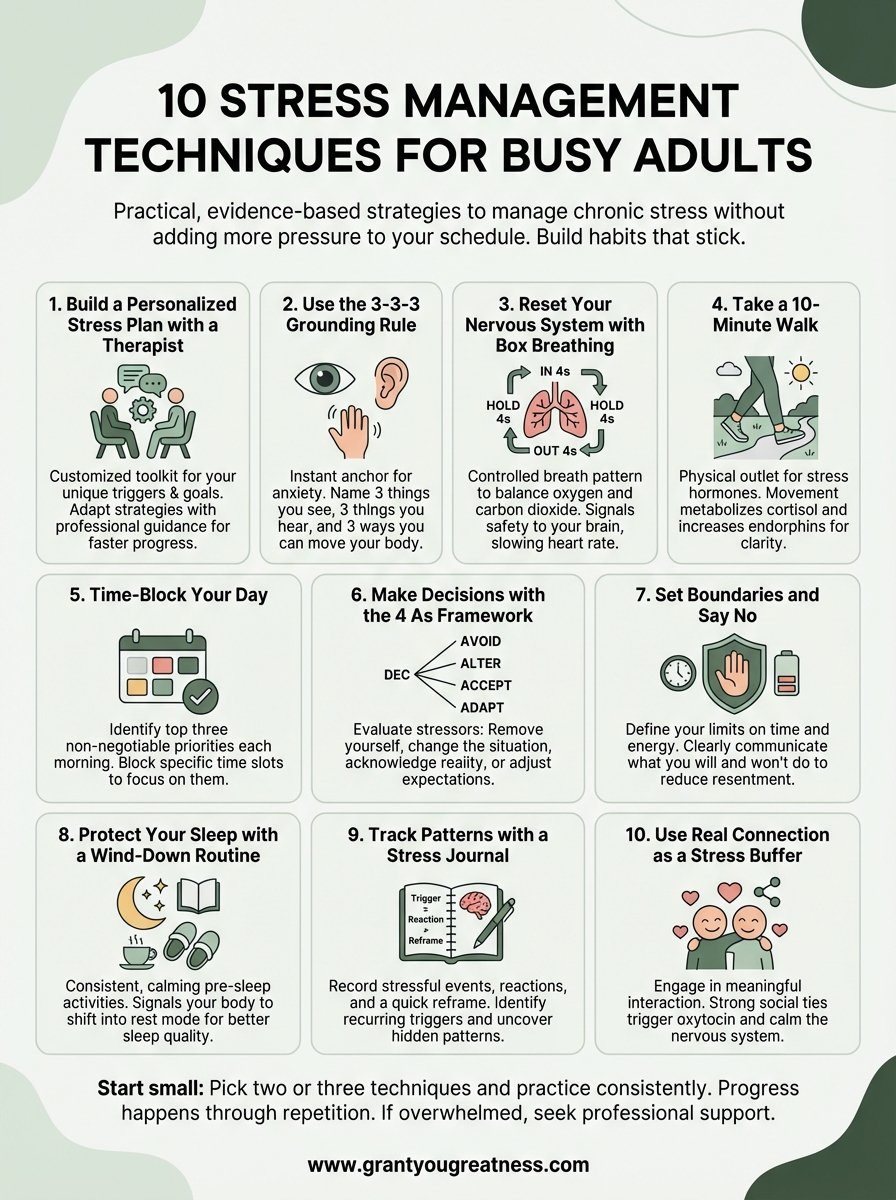
You now have ten proven stress management techniques that fit into your actual schedule without adding more pressure to your day. These strategies work because they address real stress triggers through practical actions you can take immediately, whether you have five minutes or a full hour. The key is picking two or three techniques that resonate most with your current situation and building them into your routine consistently rather than trying to implement everything at once.
Start small this week. Try box breathing before your next stressful meeting, commit to one 10-minute walk, or practice saying no to one request that would overextend you. Track what helps and what doesn't using the journal method from technique nine. Progress happens through repetition, not perfection, so expect some trial and error as you figure out which approaches deliver the most relief for your specific circumstances.
If stress continues overwhelming you despite trying these techniques, working with an experienced therapist provides the customized support and accountability that makes lasting change possible when you need more than self-help strategies alone.