What Is Career Counseling? Process, Benefits, And Next Steps
You've built a career, put in the years, and checked the boxes, yet something still feels off. Maybe you dread Monday mornings, feel overlooked for promotions, or wonder if you chose the wrong path entirely. If you've ever typed "what is career counseling" into a search bar hoping for answers, you're not alone. Millions of working adults reach a point where they need more than advice from friends or generic online quizzes.
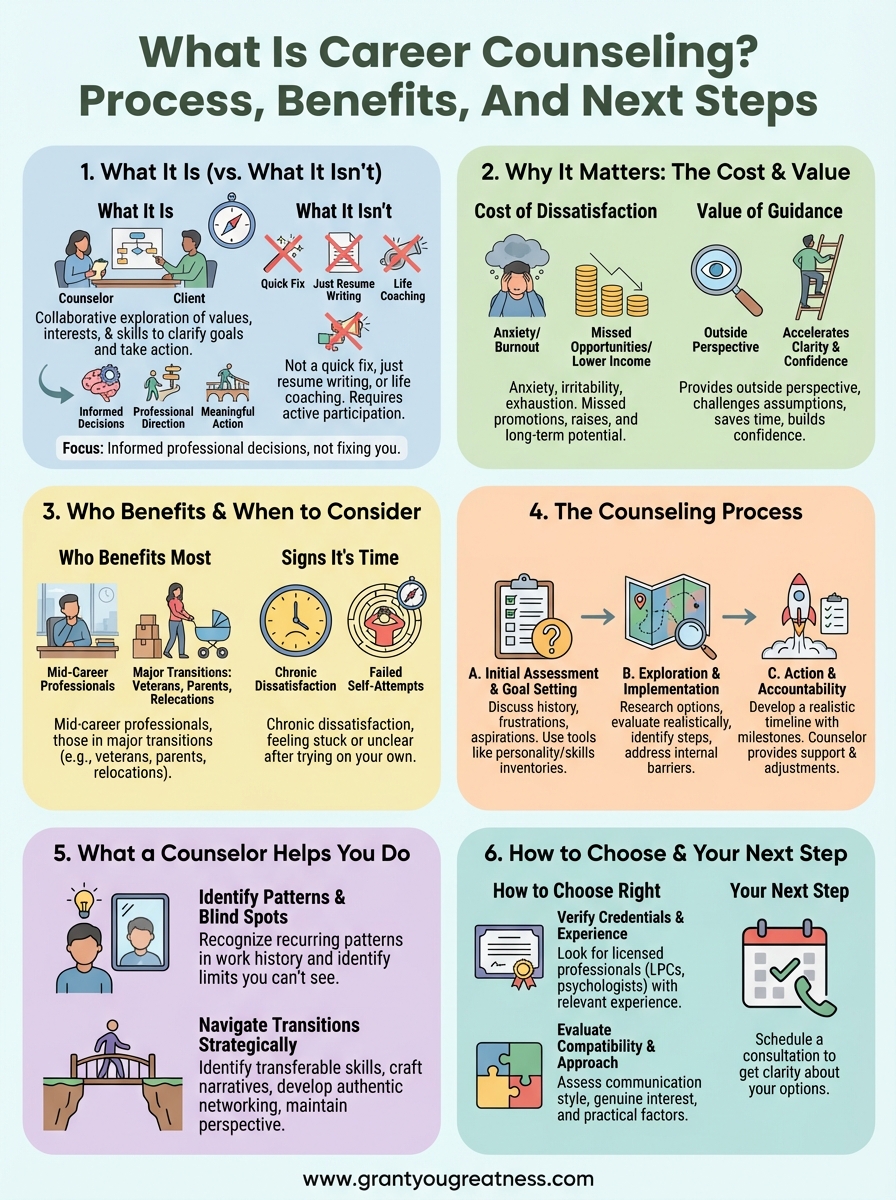
Career counseling is a structured, professional process designed to help you gain clarity about your professional direction and take meaningful action. It goes beyond simply updating your resume or browsing job boards. A trained career counselor works with you to examine your values, strengths, and goals, then helps you build a realistic plan to move forward.
At Grant You Greatness, Dr. Grant Horner brings over 20 years of clinical experience to career counseling, offering practical guidance for professionals feeling stuck or unfulfilled in North County San Diego and beyond. This article breaks down what career counseling actually involves, who benefits most from it, and how to determine if it's the right step for you.
What career counseling is and is not
Many people confuse career counseling with other types of professional support, which can lead to unrealistic expectations or missed opportunities. Understanding what career counseling actually involves helps you decide if it fits your current needs. You deserve clarity about what you're signing up for before you invest your time and money into the process.
What career counseling is
Career counseling is a collaborative process where you work with a trained professional to explore, clarify, and act on your career goals. The counselor doesn't tell you what to do or hand you a predetermined path. Instead, they help you examine your values, interests, skills, and circumstances to identify directions that align with who you are and what you want from your professional life.

The process typically involves assessments, in-depth conversations, and practical planning. Your counselor might use personality inventories, interest assessments, or skills evaluations to help you understand your strengths and preferences. From there, you work together to identify realistic career options and create actionable steps to move toward them. This might include exploring new industries, preparing for a career transition, or resolving dissatisfaction in your current role.
Career counseling focuses on helping you make informed decisions about your professional future, not on fixing you or pushing you toward a specific outcome.
You should expect honesty and practical guidance throughout the process. A good career counselor will challenge assumptions, ask difficult questions, and help you see blind spots that might be holding you back. They'll also provide resources, introduce strategies for navigating workplace challenges, and help you build confidence in your decisions.
What career counseling is not
Career counseling is not a quick fix or a magic solution. You won't walk out of a single session with a perfect job offer or a foolproof five-year plan. The process requires active participation, honest self-reflection, and a willingness to do the work between sessions. If you're looking for someone to simply tell you what career to pursue, you'll be disappointed.
It's also not the same as resume writing services, job placement agencies, or networking groups. While your counselor might offer guidance on these topics, the primary focus remains on helping you understand yourself and make better career decisions. Career counseling addresses the underlying questions about direction and fulfillment, not just the mechanics of landing your next job.
Career counseling is not life coaching, though the two can overlap. Life coaches often work on broader personal development goals and motivation. Career counselors, particularly those with clinical training like Dr. Grant Horner, bring psychological expertise to help you work through deeper issues that might be affecting your professional life. They understand how anxiety, grief, relationship problems, or past experiences can influence your career satisfaction and decision-making.
Finally, career counseling is not limited to people who are unemployed or desperate. You don't need to hit rock bottom to benefit from professional guidance. Many successful professionals seek career counseling when they feel stuck, unfulfilled, or curious about what else might be possible. The process works best when you're ready to explore, not when you're in crisis mode.
Understanding what is career counseling and what it isn't helps you approach the process with realistic expectations. You'll get the most value when you recognize that career counseling is an investment in your long-term professional satisfaction, not a shortcut to an easier life.
Why career counseling matters
You spend roughly one-third of your adult life working, yet many professionals drift through their careers without intentionally choosing their direction. Career dissatisfaction doesn't just affect your nine-to-five hours. It seeps into your evenings, weekends, and relationships, creating a sense of frustration and wasted potential that follows you home. Understanding what is career counseling and why it matters starts with recognizing the real cost of staying stuck in the wrong role or career path.
The cost of career dissatisfaction
Career dissatisfaction creates ripple effects throughout your entire life. When you dread going to work or feel undervalued in your role, that stress manifests as anxiety, irritability, and physical exhaustion. You might find yourself snapping at your partner, withdrawing from friends, or losing interest in hobbies that once brought you joy. The mental and emotional toll of spending 40-plus hours per week in an unfulfilling job compounds over time, potentially leading to burnout, depression, or physical health problems.
Beyond personal wellbeing, career dissatisfaction affects your financial future. Staying in the wrong role often means missing out on promotions, raises, and opportunities that align with your strengths. You might avoid networking, stop developing new skills, or settle for mediocre performance because you've mentally checked out. This stagnation doesn't just hurt your current income. It limits your long-term earning potential and retirement security, creating financial stress that adds to your existing frustration.
Career dissatisfaction costs you more than just money and time; it robs you of the sense of purpose and fulfillment that makes work meaningful.
The value of professional guidance
Professional guidance from a career counselor provides an outside perspective you can't get from friends, family, or internet research alone. Your inner circle means well, but they're limited by their own experiences and biases. A trained counselor asks questions you haven't considered, challenges assumptions you didn't know you had, and helps you identify patterns that keep you stuck in unsatisfying situations.
Career counseling accelerates the process of finding clarity and taking action. Instead of spending years feeling lost or trying random career changes, you work with someone who understands how to navigate career transitions systematically. This targeted approach saves you time, reduces costly mistakes, and helps you build confidence in your decisions rather than second-guessing every move you make.
Who benefits and when to consider it
Career counseling serves professionals at various stages and circumstances, not just those facing unemployment or major crises. You might wonder if your situation warrants professional guidance or if you should figure things out on your own. Recognizing when you could benefit from structured support and expert insight helps you avoid wasting years feeling stuck or making costly career mistakes you'll later regret.
Professionals who benefit most
Mid-career professionals often gain the most from career counseling because they've accumulated enough experience to know what they don't want, but they struggle to identify what comes next. You've invested years building expertise in a particular field, yet that same experience can create blind spots about other possibilities. Career counselors help you translate your skills into new contexts and explore options you hadn't considered viable.

People facing major life transitions also benefit significantly. Divorces, relocations, health changes, or family responsibilities can force you to reevaluate your professional priorities and availability. You might need help identifying careers with better work-life balance or understanding how to explain gaps in your resume. Veterans transitioning to civilian careers, individuals returning to work after caregiving, and professionals dealing with workplace trauma all gain clarity through targeted career counseling that addresses their specific circumstances.
Career counseling works best when you're ready to examine your situation honestly and take action on what you discover.
Signs it's time to consider career counseling
You should consider career counseling when dissatisfaction becomes chronic rather than temporary. Everyone has bad days or difficult weeks at work. However, if you've spent months or years feeling unfulfilled, undervalued, or trapped in your current role, that's a clear signal you need outside perspective. Waiting longer only deepens the pattern of unhappiness and makes change feel more overwhelming.
Consider seeking help when you've tried solving career problems on your own without success. You've updated your resume multiple times, scrolled through job postings, and talked to friends, yet you still feel unclear about your direction or paralyzed by options. Career counseling provides the structure and accountability you need to move from thinking about change to actually making it happen. Understanding what is career counseling means recognizing it as a practical investment in your professional future, not a last resort when everything else has failed.
What happens in the career counseling process
The career counseling process follows a structured yet flexible approach that adapts to your specific needs and circumstances. While every counselor has their own methods, you can expect a general progression that moves from understanding where you are now to creating actionable steps toward where you want to be. Knowing what happens in typical sessions helps you prepare mentally and make the most of your time with a professional.

Initial assessment and goal setting
Your first session establishes the foundation for everything that follows. The counselor asks detailed questions about your work history, current situation, and what brought you to seek help. You'll discuss your frustrations, aspirations, and any obstacles you've encountered when trying to change careers or improve your professional life. This conversation helps the counselor understand your unique context and personality rather than treating you like a generic case study.
Most counselors introduce assessment tools during the early stages. These might include personality inventories, skills evaluations, or interest surveys that provide objective data about your strengths and preferences. You'll complete these instruments between sessions or during appointments, then discuss the results together. The goal isn't to label you or put you in a box but to identify patterns that inform your career decisions and help you see yourself more clearly.
Career counseling works because it combines self-reflection with practical analysis, not just one or the other.
Exploration and implementation
Once you understand your baseline, the process shifts to exploring possibilities and creating concrete plans. Your counselor helps you research potential career paths, evaluate options realistically, and identify specific steps you need to take. This might involve informational interviews, skill development, or addressing internal barriers like fear of change or imposter syndrome that keep you stuck.
The final phase focuses on action and accountability. You develop a realistic timeline with measurable milestones rather than vague intentions to "figure things out eventually." Your counselor provides ongoing support as you implement your plan, helping you navigate setbacks, celebrate progress, and adjust your approach when circumstances change. Understanding what is career counseling means recognizing that the process doesn't end after a few conversations. You continue working with your counselor until you've made meaningful progress toward your professional goals and feel confident moving forward independently.
What a career counselor can help you do
Career counselors provide specific, tangible support that goes beyond general career advice you might find online or from well-meaning friends. Understanding what is career counseling means recognizing the practical tools and strategies counselors use to help you make better professional decisions. The value lies in their ability to help you see what you can't see yourself and translate that insight into concrete action rather than just leaving you with vague feelings of inspiration.
Identify patterns and blind spots
A career counselor helps you recognize recurring patterns in your work history that explain why certain jobs satisfied you while others left you frustrated. You might discover that you consistently struggle in hierarchical environments, thrive when solving complex problems independently, or become disengaged when your work lacks meaningful impact beyond profits. These patterns often remain invisible until someone with training asks the right questions and connects dots across your various experiences.
They also identify blind spots that limit your career options unnecessarily. You might undervalue skills that employers desperately need, dismiss entire industries because of outdated assumptions, or sabotage opportunities through behaviors you don't recognize as problematic. Your counselor points out these patterns without judgment and helps you develop awareness that prevents you from repeating the same mistakes in your next role or career move.
Career counselors see patterns you've lived with so long they've become invisible, then help you break cycles that no longer serve you.
Navigate career transitions strategically
Career counselors guide you through the practical mechanics of changing careers or advancing in your current field. They help you identify transferable skills, craft compelling narratives that explain career gaps or pivots, and develop networking strategies that feel authentic rather than forced. You learn how to position yourself for opportunities that align with your goals instead of settling for whatever comes along first.
They also provide accountability and support when transitions feel overwhelming or uncertain. Changing careers involves risk, rejection, and moments when you question your decisions. Your counselor helps you maintain perspective during setbacks and adjust your strategy when needed, ensuring you don't abandon promising directions just because the path gets difficult temporarily.
How to choose the right career counselor
Choosing the right career counselor determines whether you'll waste time and money or actually make progress toward a more satisfying professional life. Not all counselors offer the same level of expertise, and finding someone who matches your specific needs makes the difference between clarity and continued confusion. You need to evaluate counselors based on concrete qualifications and compatibility rather than simply picking the first name that appears in search results or accepting whoever your insurance covers.
Verify credentials and relevant experience
Start by confirming the counselor holds legitimate professional credentials rather than just claiming expertise without proper training. Look for licensed mental health professionals with specialized training in career counseling, such as Licensed Professional Counselors (LPCs) or psychologists with career development backgrounds. These credentials ensure the counselor understands psychological factors that influence career satisfaction and can address underlying issues like anxiety or relationship problems that might be affecting your professional life.
Experience matters as much as credentials. A counselor who has worked with professionals in your situation understands the unique challenges you face and brings proven strategies rather than theoretical knowledge alone. If you're a Veteran transitioning to civilian work, you need someone with that specific background. Mid-career professionals benefit from counselors who understand corporate dynamics and the complexity of leaving established careers. Ask potential counselors directly about their experience with cases similar to yours before committing to work together.
The right counselor combines professional training with practical experience helping people in situations like yours, not just general career advice.
Evaluate compatibility and approach
Schedule initial consultations with potential counselors to assess whether their communication style fits your personality and needs. Some counselors take a more directive approach, offering specific guidance and action steps. Others prefer a collaborative style where you drive most decisions. Neither approach is inherently better, but you need someone whose method matches how you process information and make decisions. Understanding what is career counseling means recognizing that the relationship quality directly affects your results.
Pay attention to whether the counselor asks thoughtful questions, listens carefully to your answers, and demonstrates genuine interest in understanding your situation rather than rushing to generic solutions. You should feel challenged but supported, not judged or pressured. Consider practical factors like session availability, location preferences (in-person versus online), and fee structures that fit your budget. The best counselor on paper won't help you if you can't consistently attend sessions or afford the investment long-term.
Your next step
Understanding what is career counseling gives you the foundation, but knowledge alone won't change your professional situation. You need to decide whether your current circumstances warrant outside help and then take action rather than continuing to research indefinitely. If you've recognized yourself in this article, particularly the signs of chronic dissatisfaction or failed attempts to solve career problems alone, you've already identified that something needs to change.
The practical next step involves reaching out to a qualified career counselor who can assess your specific situation. Dr. Grant Horner at Grant You Greatness offers over 20 years of clinical experience helping professionals in North County San Diego and online break free from career stagnation. You can schedule a free consultation to discuss your circumstances and determine if career counseling fits your needs. Taking this step doesn't commit you to months of therapy. It simply gives you clarity about your options and whether professional guidance makes sense for where you are now.